Aug 31, 2026 • 5 min read
What NFC Wallet Passes Mean for Trade Shows and Expos

CATEGORIES
SOCIAL SHARE
Secure Lead Retrieval and Accreditation Tracking
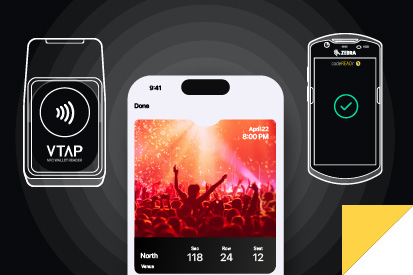
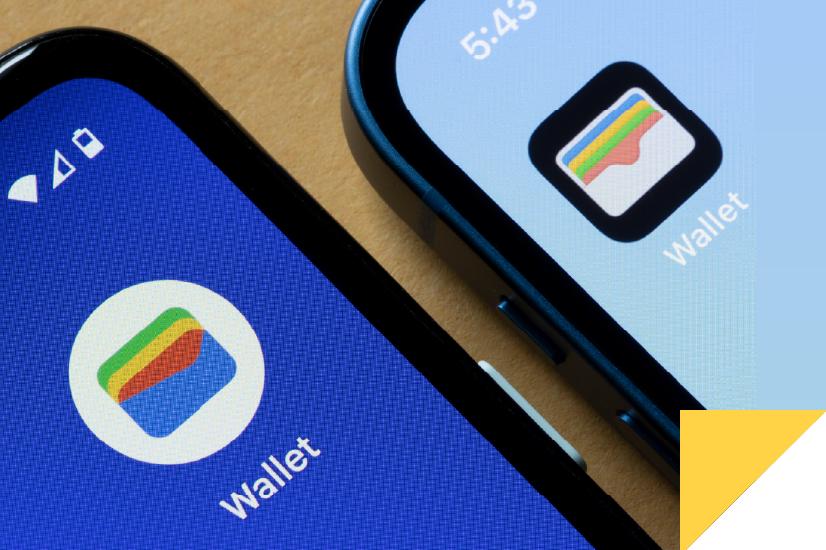
Trade show and expo organizers juggle two very different priorities on the show floor: protecting attendee data during lead retrieval and accurately tracking attendance for sessions that carry accreditation requirements. CodeREADr’s new NFC support validates Apple Wallet and Google Wallet passes via Apple’s VAS and Google’s Smart Tap protocols, using certified Zebra and VTAP hardware. This gives organizers a way to strengthen both, without requiring a single one-size-fits-all approach.
This article looks at where NFC adds real value for trade shows and expos, specifically by securing PII during lead retrieval and tracking attendance for accredited sessions. [Note: CodeREADr supports event organizers and event technology providers who need an enterprise-grade solution for lead retrieval and attendance tracking.]
Lead Retrieval: Why PII Security Is the Real Cost Justification
Lead retrieval is one of the clearest reasons exhibitors show up at all. It’s how a booth conversation turns into a sales pipeline. But traditional lead retrieval methods, whether badge scanning or barcode capture, move personal data in ways that are increasingly difficult to justify, especially at events where attendees share sensitive professional or medical information.
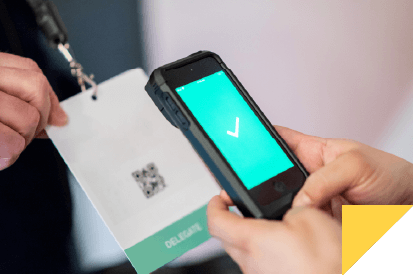
The exposure with traditional methods. A printed badge with a visible barcode or QR code is, functionally, a data carrier that anyone can scan. Even if the data is encrypted or encodes only an ID without PII, an exhibitor with a camera can capture it without the attendee’s permission. For medical conferences in particular, where attendee affiliations and credentials can carry real sensitivity, that’s a meaningful liability, not just an inconvenience.
How NFC changes the equation. With NFC passes, the data exchanged at the point of contact is encrypted and device-bound. A tap between the attendee’s phone and a certified reader initiates a secure handshake. There’s no visible code to capture, copy, or scan from a distance. The attendee controls the exchange by physically tapping their device to the exhibitor’s reader, rather than relying on a barcode that can be passively scanned by anyone nearby.
Justifying the hardware investment. NFC passes issued to attendees for lead retrieval require each exhibitor to have a certified reader, such as a portable Zebra Touch Computer or a stationary VTAP device. There’s a real cost to weigh, whether exhibitors purchase or rent the hardware for the show. But that cost is easier to justify when it’s framed correctly: it’s not a convenience upgrade; it’s a data security investment. For exhibitors at medical, legal, financial, or other compliance-conscious events, being able to tell attendees “your information is only shared when you tap, and it’s encrypted in transit” is a meaningful differentiator, and sometimes an expectation rather than a nice-to-have.
Organizers can support this by offering NFC lead retrieval as a premium option: exhibitors who want the added security and professionalism of tap-based lead capture can opt into certified hardware, while exhibitors with lighter needs can continue using barcode-based methods.
Accreditation Tracking: Matching the Method to the Requirement
Many trade shows and expos include sessions tied to continuing education credits, certification requirements, or other accreditation standards. That means attendance must be tracked accurately enough to hold up in an audit or verification.
Barcode and QR passes work well for most sessions. General accreditation tracking includes confirming that an attendee was present for the duration of a session and capturing check-in and check-out times. Barcode and QR wallet passes are proven, low-friction solutions. They don’t require exhibitors or session hosts to invest in NFC hardware, and they integrate with the scanning infrastructure CodeREADr already offers to event organizers for attendance tracking.
NFC passes make sense when the stakes are higher. For sessions where the integrity of attendance data really matters, such as high-value certifications, regulatory-driven accreditation, or sessions with a history of proxy check-ins (one attendee scanning in for another), NFC’s device-bound validation closes a gap that barcode/QR can’t. Because the credential can’t be screenshotted, shared, or scanned from someone else’s phone, NFC verifies not just that a ticket was valid, but that it was presented by the device it was issued to.
The practical approach: use both, deliberately. There’s no need to pick one method for the entire event. Most organizers will find that NFC passes are the right fit for specific high-accountability sessions, while barcode/QR passes remain the sensible default everywhere else. This keeps hardware costs proportional to where the security actually matters, rather than requiring a wall-to-wall NFC rollout.
Bringing It Together
For trade show and expo organizers, the value of CodeREADr and NFC passes isn’t about replacing what’s working. It’s about applying stronger security precisely where it’s needed:
- Lead retrieval benefits from NFC’s encrypted, tap-based exchange, particularly for exhibitors at compliance-sensitive events where PII protection is a real differentiator worth the hardware investment.
- Accreditation tracking can lean on barcode/QR passes for most sessions, reserving NFC for the sessions where attendance integrity carries real consequences.
Because CodeREADr supports barcode, QR, and NFC validation on the same platform, organizers and exhibitors aren’t locked into an all-or-nothing decision; they can match the method to the moment. If you’re planning an upcoming trade show or expo and want to think through where NFC makes sense for your lead retrieval or accreditation needs, our team is ready to help.
[Contact support@codereadr.com to start a conversation about your event’s security and tracking requirements. Also, please read this article about generating passes. While it primarily concerns ticketing, much of the insight also applies to passes for lead retrieval and attendance tracking. ]