Aug 12, 2026 • 5 min read
Apple VAS and Google Smart Tap: Validating NFC Passes
CATEGORIES
SOCIAL SHARE
Understanding NFC Wallet Pass and Ticket Validation when using Apple VAS and Google Smart Tap for Modern Events
As the use of digital wallets grows, event organizers are increasingly evaluating NFC (Near Field Communication) for tap-based ticket validation.
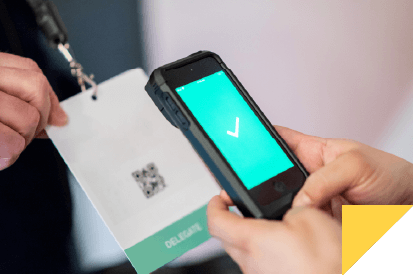
The CodeREADr mobile app for iOS and Android OS devices has long supported high-speed ticket validation by scanning barcodes, QR codes, and NFC wristbands. Over 100 ticketing companies and 1000s of event organizers use the app for event access control.
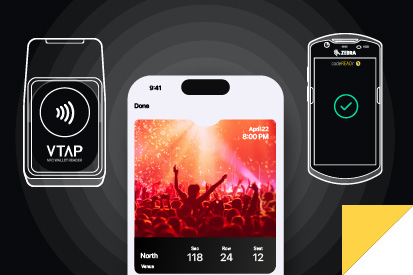
We have now added support for Apple VAS (Value Added Services) and Google Smart Tap when using certified hardware from Zebra and VTAP.
This capability enables organizations to add secure NFC wallet validation to their existing event operations while continuing to use CodeREADr for access control, duplicate prevention, attendance tracking, and other validation workflows.
How NFC Wallet Validation Works
Traditional barcode validation reads a visible identifier displayed on a ticket or mobile device. NFC validation instead uses short-range wireless communication between an attendee’s phone or wearable device and an NFC-enabled reader.
The process involves several security components:
- Encrypted credential data: When an attendee taps a compatible device, the wallet securely transmits an encrypted payload to the NFC reader. Unlike a visible barcode, the NFC credential cannot be copied or shared through a screenshot. It may also be bound to the attendee’s device, providing additional protection against unauthorized credential sharing and duplication.
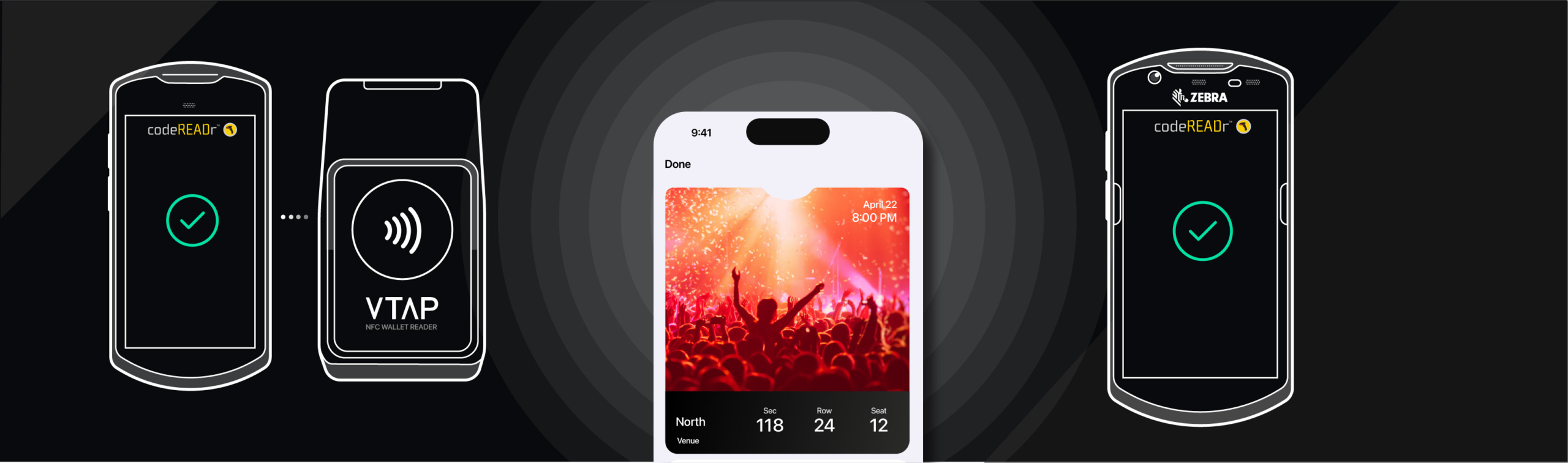
- Compatible NFC hardware: CodeREADr supports compatible Zebra and VTAP hardware that serves as the interface between the attendee’s wallet credential and the CodeREADr validation workflow.
- Reader keys: Authorized readers are provisioned with the keys required to access the encrypted pass data. These reader keys allow the credential information to be securely retrieved without exposing the issuer’s signing credentials.
- Secure validation: Reader keys are used to access credential data, not to create or sign new passes. Therefore, possession of a reader does not allow someone to generate valid tickets.
Flexible Hardware Options
Organizations can select the hardware configuration that best fits their operating environment.
- Zebra mobile computers: Compatible Zebra devices, such as the TC22 and TC27 series, provide an all-in-one option for both NFC tapping and conventional barcode scanning. Their rugged, mobile design can be well suited for entrances, roaming staff, and other high-mobility environments.
- VTAP readers: VTAP offers stand-alone NFC readers that can communicate with supported iOS or Android devices. This can provide a practical way to add NFC functionality while continuing to use an organization’s existing mobile-device fleet. We used the VTAP100-PRO-BW-CC model for testing.
Consistent Validation Logic
NFC credentials can connect to the same CodeREADr databases and validation services used for barcode tickets.
The underlying rules for access control, duplicate prevention, attendance tracking, ticket status, and attendee information can remain consistent regardless of whether the credential is presented by NFC, QR code, or barcode, including passes that use QR codes instead of NFC.
Three Ways to Validate Passes
Organizations do not need to move from their existing access control methods to Wallet NFC validation all at once. CodeREADr can support several implementation approaches.
1. Barcode-First Wallet Passes
Digital wallet passes can display a barcode or QR code for conventional scanning.
No NFC hardware is required, and organizers can continue using their existing CodeREADr-compatible scanning devices. Attendees receive the convenience of storing tickets in their digital wallets while the event retains its current barcode-validation process.
2. Hybrid NFC and Barcode Validation
Organizations can introduce NFC while continuing to support existing barcode workflows, whether presented as a Wallet pass, traditional e-ticket, or physical ticket.
For example, an event may add tap-enabled lanes using compatible Zebra or VTAP hardware while maintaining barcode lanes for other attendees. NFC may initially be offered to VIPs, season-ticket holders, staff members, or selected groups before a wider rollout.
A hybrid model also provides a fallback method when attendees are unable to use an NFC credential.
3. Full-Scale NFC Access
Organizations with higher security requirements may choose to equip every entry lane with compatible NFC hardware and issue NFC-enabled wallet passes to all attendees.
This approach can provide a streamlined tap-based entry experience and greater protection against casual ticket sharing. It may be appropriate for high-volume events, restricted-access environments, or programs in which credential security is a primary concern.
Even in an NFC-focused deployment, organizers may wish to retain barcode or manual lookup procedures as an operational fallback.
Planning an NFC Deployment
CodeREADr can help organizations evaluate Zebra and VTAP hardware options, configure validation workflows, and determine whether a barcode-first, hybrid, or full-scale NFC deployment is the best fit. Contact support@codereadr.com to discuss your hardware requirements, validation workflow, and rollout strategy.
We also published a blog article exploring whether to generate your own passes or use a pass provider instead.